Buying Hyderabad property for NRIs? Compare plots, apartments and resale homes, plus documents, legal checks, taxes and NRI buying tips.
Living abroad but thinking about buying property in Hyderabad?
You may already have a few questions in mind:
Should you buy a plot or an apartment? Is a resale home safer? Which documents should you verify? Can an NRI buy property in Hyderabad without being physically present? And what happens when you eventually want to sell the property?
These are important questions because buying property from overseas is very different from simply choosing a location and checking the price.
For NRIs, the decision involves property type, location, documentation, payment channels, legal verification, taxation, property management and future exit plans.
Hyderabad offers several property options, from residential plots and apartments to ready-to-move homes and resale properties. But the right choice depends on what you actually want from the property.
This guide from Propmint Realty explains what NRIs should check before buying a plot, apartment or resale home in Hyderabad.
Why Are NRIs Looking at Hyderabad Property?
Hyderabad has developed into an important residential and commercial market, supported by employment centres, technology businesses, infrastructure development and expanding residential corridors.
For an NRI, however, the attraction should not be limited to the phrase “Hyderabad is growing.”
A property purchase should answer a more practical question:
What exactly do you want this property to do for you?
You may want:
- A future home for your family
- A property for parents or relatives
- Rental income
- A long-term investment
- A residential plot for future construction
- A ready-to-use property
- A resale opportunity
- A property that can potentially be sold later
Your objective can change which property type makes sense.
Plot, Apartment or Resale Home: Which One Should an NRI Consider?
There is no single property type that works for every NRI.
Instead, compare the three options based on purpose, management requirements, construction status, location and exit strategy.
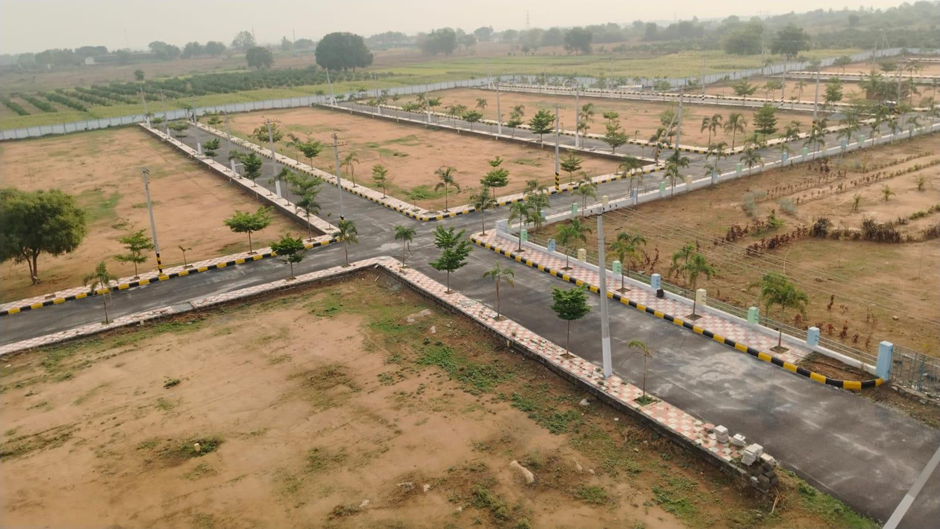 image.png 1.21 MB
1. Residential Plot
A residential plot gives you ownership of land without requiring you to immediately construct a building.
This can appeal to NRIs who want to purchase land today and consider construction later.
What can make a plot attractive?
Plot, Apartment or Resale Home: Which One Should an NRI Consider?
There is no single property type that works for every NRI.
Instead, compare the three options based on purpose, management requirements, construction status, location and exit strategy.
image.png 1.21 MB1. Residential Plot
A residential plot gives you ownership of land without requiring you to immediately construct a building.
This can appeal to NRIs who want to purchase land today and consider construction later.
What can make a plot attractive?
- Flexibility to construct in the future
- No immediate building maintenance
- Potential for personal-use construction
- Different plot sizes and locations
- Possibility of holding the property for the long term
But there is one important point:
A plot is not simply “land at a good price.”
The approval and legal status of the layout matter.
Before buying a plot, verify:
A plot is not simply “land at a good price.”
The approval and legal status of the layout matter.
Before buying a plot, verify:
- Title and ownership
- Encumbrances
- Layout approval
- Land-use status
- Survey details
- Road access
- Plot dimensions
- Development status
- Applicable local authority permissions
- Registration records
- Whether the property can legally be used for the intended purpose
HMDA itself notes that a valid layout approval is important for development and building construction permissions.
For NRIs, independent legal verification is particularly important because visiting the site repeatedly may not be practical.
2. Apartment
An apartment can be a practical option for an NRI who wants a constructed property rather than waiting for future development.
Depending on the project, you may find:
- Under-construction apartments
- Ready-to-move apartments
- Gated-community apartments
- Premium residential projects
- Smaller apartment developments

- A ready residential asset
- Rental-use possibilities
- Access to established community amenities
- Easier property management compared with independent land
- A home for family members
- A future residence in Hyderabad
But apartments come with their own checklist.
You should examine:
- Project approvals
- RERA registration, where applicable
- Builder track record
- Construction status
- Agreement terms
- Carpet area and saleable area
- Parking allocation
- Maintenance charges
- Amenities
- Possession terms
- Occupancy Certificate, where applicable
- Utility connections
- Society or association arrangements
The Telangana RERA portal provides registered-project information, including sanctioned plans, approvals, project status and other project-related disclosures.
The question NRIs should ask is:
“Am I buying an apartment because I genuinely need a constructed property, or simply because the project looks attractive in a brochure?”
That distinction can prevent an expensive mistake.
 image.png 1.18 MB
3. Resale Home
A resale property can be especially interesting for NRIs who want to understand what they are actually buying before completing the transaction.
Instead of looking only at proposed construction, you can potentially inspect an existing property and its surrounding neighbourhood.
You may be able to evaluate:
- Actual construction quality
- Existing neighbourhood
- Road access
- Nearby schools and hospitals
- Public transport
- Local shopping
- Building maintenance
- Water availability
- Parking
- Rental demand
- Property condition
But resale properties require careful document verification.
Never assume that an old property is automatically a safer property.
An older property can still have:
- Outstanding loans
- Ownership disputes
- Unresolved inheritance issues
- Documentation gaps
- Unauthorized modifications
- Pending dues
- Society-related issues
- Mismatches between documents and the physical property
That is why a resale property should be checked from both a legal and physical perspective.
What Should NRIs Check Before Buying Property in Hyderabad?
This is where the real work begins.
A property may look perfect during a video call, but the important questions are often hidden in the documents.
1. Confirm Your Eligibility
Under the RBI framework, an NRI can purchase immovable property in India other than agricultural land, plantation property and a farmhouse, subject to applicable FEMA rules. Payments for eligible purchases are generally required through permitted banking channels, including inward remittance or eligible NRE/FCNR(B)/NRO account routes.
Rules can depend on your specific status and circumstances.
Therefore, NRIs should confirm the applicable FEMA, banking and tax requirements before making a substantial payment.
2. Verify the Property Title
Title verification is one of the most important steps.
Ask:
Who actually owns the property?
A seller's statement is not enough.
A property lawyer should examine relevant ownership documents and the chain of title.
Depending on the property, this may include:
- Sale deeds
- Previous title documents
- Gift deeds
- Partition documents
- Inheritance documents
- Mutation records
- Revenue records
- Encumbrance Certificate
- Relevant approvals
The objective is to understand whether the seller has the legal right to transfer the property
3. Check for Encumbrances
An Encumbrance Certificate can help identify registered transactions or certain recorded encumbrances affecting the property.
This becomes particularly important when purchasing resale property.
Ask:
Is there an existing loan, registered claim or transaction that needs to be resolved before purchase?
Do not treat one document as the complete legal verification. A professional title search should be considered where appropriate.
4. Verify Approvals
For plots and developments, approvals can be critical.
Depending on the location and property type, check the applicable planning authority and approvals.
For properties within the relevant HMDA jurisdiction, HMDA provides information and services relating to layout permissions, building permissions and planning approvals.
For a project covered by RERA requirements, check the project's registration and available disclosures through the Telangana RERA system.
Remember:
“Approved project” should never be accepted as a complete answer.
Ask:
Approved by whom? For what? What exactly was approved?
That one question can lead to much better due diligence.
5. Don't Ignore the Location
For an NRI, location can become even more important because you may not visit the property frequently.
Look beyond the current appearance.
Check:
- Main road connectivity
- Employment hubs
- Schools
- Hospitals
- Public transport
- Shopping and daily necessities
- Existing residential development
- Road width
- Drainage
- Water availability
- Nearby infrastructure
- Planned development
- Surrounding land use
But be careful with promises about future infrastructure.
A proposed road, metro line or business hub should be treated as future potential, not a completed benefit, until it is officially confirmed and actually implemented.

6. Physically Inspect the Property
This is one area where technology helps, but cannot completely replace physical verification.
If you are abroad:
A proposed road, metro line or business hub should be treated as future potential, not a completed benefit, until it is officially confirmed and actually implemented.
6. Physically Inspect the Property
This is one area where technology helps, but cannot completely replace physical verification.
If you are abroad:
- Ask a trusted representative to visit
- Arrange a professional inspection
- Request location videos
- Compare the property's documents with the physical site
- Check boundaries
- Inspect access roads
- Verify the surrounding development
For resale homes, inspect:
- Walls and ceilings
- Plumbing
- Electrical systems
- Doors and windows
- Flooring
- Water leakage
- Parking
- Common areas
- Lift condition
- Building maintenance
A beautiful property video may show the best five minutes of the property.
A physical inspection shows what the camera didn't.
7. Understand the Total Cost
The advertised property price is not necessarily the final amount you will spend.
Consider:
Property price + stamp duty + registration charges + legal fees + brokerage + documentation costs + loan-related costs + maintenance + renovation + property management
For an apartment, also consider recurring maintenance.
For a plot, consider future construction costs.
For a resale home, renovation expenses can sometimes significantly change the effective purchase cost.
The better question is:
“What is my total acquisition cost?”
—not simply—
“What is the price per square yard or square foot?”
8. Understand Tax and TDS Requirements
Tax treatment can vary depending on the transaction, seller's residential status, property type, holding period and other factors.
NRIs should not rely on generic internet calculators for a major property transaction.
For example, the Income Tax Department distinguishes transactions involving resident and non-resident sellers for TDS purposes, and specific provisions can apply when purchasing property from a non-resident.
If you are buying or selling property as an NRI, consult a qualified tax professional before executing the transaction.
This can help you understand:
- TDS
- Capital gains
- Tax filing
- Repatriation
- Applicable exemptions
- Documentation requirements
9. Think About Repatriation Before You Buy
Many NRIs think about selling only after purchasing.
It is better to consider the exit route before entering the transaction.
RBI rules contain specific conditions around repatriation of sale proceeds, including conditions relating to how the property was acquired and the source of funds. There are also specific provisions concerning residential properties and repatriation limits.
So ask your banker and tax advisor:
“If I sell this property later, what will I need to do to move the eligible proceeds outside India?”
Understanding the exit process early can prevent surprises later.
10. Consider a Power of Attorney Carefully
If you cannot travel to Hyderabad for every stage of the transaction, you may consider authorising someone to act on your behalf through a Power of Attorney where legally appropriate.
But this is not something to sign casually.
A POA should be:
Many NRIs think about selling only after purchasing.
It is better to consider the exit route before entering the transaction.
RBI rules contain specific conditions around repatriation of sale proceeds, including conditions relating to how the property was acquired and the source of funds. There are also specific provisions concerning residential properties and repatriation limits.
So ask your banker and tax advisor:
“If I sell this property later, what will I need to do to move the eligible proceeds outside India?”
Understanding the exit process early can prevent surprises later.
10. Consider a Power of Attorney Carefully
If you cannot travel to Hyderabad for every stage of the transaction, you may consider authorising someone to act on your behalf through a Power of Attorney where legally appropriate.
But this is not something to sign casually.
A POA should be:
- Properly drafted
- Limited to the necessary powers
- Executed and authenticated according to applicable requirements
- Reviewed by a lawyer
- Used only for the intended transaction
The person receiving authority should be someone you trust completely.
Plot vs Apartment vs Resale
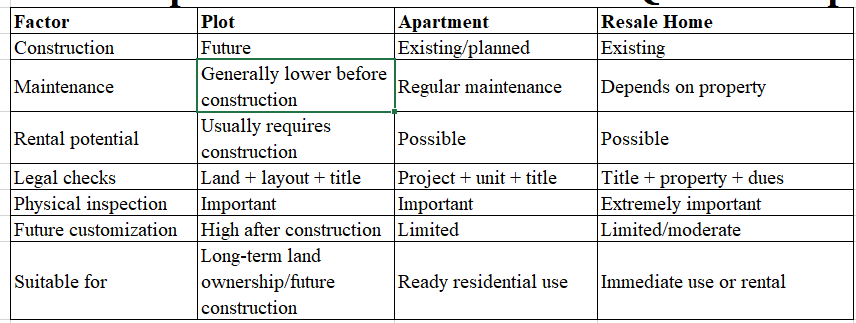 sale Home: Quick Comparison
The right choice depends on your budget, purpose, timeline, location preference and ability to manage the property from abroad.
The Biggest Mistake NRIs Should Avoid
Here is the mistake that can cost the most:
Buying based entirely on a recommendation from someone you trust.
A friend, relative, broker or family member may genuinely have your best interests in mind.
But property transactions require documentation.
Instead of asking only:
“Is this a good property?”
ask:
- Is the title clear?
- Is the seller authorised to sell?
- Are approvals valid?
- Is the layout/project properly approved?
- Are there outstanding dues?
- Does the physical property match the documents?
- What are the total transaction costs?
- What happens if I want to sell later?
- Who will manage the property after purchase?
That changes the conversation from emotion to due diligence.

A Simple NRI Property Checklist
Before paying a major amount, keep this checklist ready:
Property
☐ Location verified
☐ Physical inspection completed
☐ Property boundaries checked
☐ Access road verified
Legal
☐ Title verified
☐ Previous ownership documents checked
☐ Encumbrance search completed
☐ Seller identity verified
☐ Pending disputes checked
Approvals
☐ Applicable layout approval checked
☐ Building permission checked where relevant
☐ RERA registration checked where applicable
☐ Occupancy-related documents checked where applicable
Financial
☐ Total purchase cost calculated
☐ Registration and stamp-duty costs considered
☐ Bank/payment route confirmed
☐ Tax implications reviewed
NRI-specific
☐ FEMA requirements checked
☐ NRE/NRO/FCNR implications discussed with bank
☐ Repatriation rules understood
☐ Power of Attorney reviewed if required
☐ Tax advisor consulted
Why Professional Guidance Matters for NRIs
Buying property from another country creates an additional layer of complexity.
You may not be able to:
- Visit every property
- Meet every seller
- Inspect every document personally
- Follow up with multiple departments
- Monitor construction regularly
- Attend every transaction stage
That is where a professional real estate team can help with the property discovery and coordination process.
At Propmint Realty, the focus should not simply be on showing an NRI a list of properties.
The objective should be to help buyers understand the property, location, documentation requirements, property type and transaction process so they can make an informed decision.
Always have legal and tax matters independently verified by qualified professionals.
Final Thoughts: Don't Ask Only “Which Property Is Best?”
For an NRI, the better question is:
“Which property fits my purpose, budget, timeline and long-term plan?”
A plot may suit someone planning future construction.
An apartment may suit someone looking for a constructed residential asset with community facilities.
A resale home may appeal to someone who wants to inspect an existing property and established neighbourhood.
But whichever option you consider, don't let attractive photographs, aggressive sales pitches or promises about future growth replace proper due diligence.
Verify the documents. Check the approvals. Understand the costs. Inspect the property. Plan the exit.
Because when you're buying property from thousands of kilometres away, the smartest investment isn't necessarily the one with the most impressive brochure.
It's the one you understand completely before you sign.
Looking for Hyderabad Property as an NRI?
Whether you're exploring a residential plot, apartment or resale property in Hyderabad, start with your requirements rather than starting with a property advertisement.
Propmint Realty can help you explore available property opportunities based on your preferred location, budget and purpose.
Explore. Verify. Decide.
FAQs
Can NRIs buy property in Hyderabad?
Yes. Under applicable FEMA regulations, NRIs can purchase immovable property in India other than agricultural land, plantation property and farm houses, subject to applicable rules.
Should an NRI buy a plot or apartment in Hyderabad?
It depends on the purpose of the purchase. A plot may suit someone planning future construction, while an apartment may be more suitable for someone looking for a constructed residential property.
Can an NRI buy a resale property in Hyderabad?
NRIs can purchase eligible immovable property subject to applicable FEMA rules. Resale properties should undergo title, document, physical and financial due diligence before purchase.
What documents should an NRI check before buying property?
Important checks can include title documents, previous sale deeds, encumbrance-related records, approvals, seller identity, registration records and property-specific permissions. A property lawyer should review the documents before a major transaction.
Can an NRI buy agricultural land in India?
The rules are different for agricultural land, plantation property and farm houses. NRIs should obtain professional advice before entering such a transaction because the general residential-property rules do not apply in the same way.
Is RERA important for NRI property buyers?
Where a project falls within the applicable RERA framework, checking its Telangana RERA registration and project disclosures can be an important part of due diligence.
https://whatsapp.com/channel/0029VbCQhoIDJ6HAi7X93H2X
At Propmint Realty, the focus should not simply be on showing an NRI a list of properties.
The objective should be to help buyers understand the property, location, documentation requirements, property type and transaction process so they can make an informed decision.
Always have legal and tax matters independently verified by qualified professionals.
Final Thoughts: Don't Ask Only “Which Property Is Best?”
For an NRI, the better question is:
“Which property fits my purpose, budget, timeline and long-term plan?”
A plot may suit someone planning future construction.
An apartment may suit someone looking for a constructed residential asset with community facilities.
A resale home may appeal to someone who wants to inspect an existing property and established neighbourhood.
But whichever option you consider, don't let attractive photographs, aggressive sales pitches or promises about future growth replace proper due diligence.
Verify the documents. Check the approvals. Understand the costs. Inspect the property. Plan the exit.
Because when you're buying property from thousands of kilometres away, the smartest investment isn't necessarily the one with the most impressive brochure.
It's the one you understand completely before you sign.
Looking for Hyderabad Property as an NRI?
Whether you're exploring a residential plot, apartment or resale property in Hyderabad, start with your requirements rather than starting with a property advertisement.
Propmint Realty can help you explore available property opportunities based on your preferred location, budget and purpose.
Explore. Verify. Decide.
FAQs
Can NRIs buy property in Hyderabad?
Yes. Under applicable FEMA regulations, NRIs can purchase immovable property in India other than agricultural land, plantation property and farm houses, subject to applicable rules.
Should an NRI buy a plot or apartment in Hyderabad?
It depends on the purpose of the purchase. A plot may suit someone planning future construction, while an apartment may be more suitable for someone looking for a constructed residential property.
Can an NRI buy a resale property in Hyderabad?
NRIs can purchase eligible immovable property subject to applicable FEMA rules. Resale properties should undergo title, document, physical and financial due diligence before purchase.
What documents should an NRI check before buying property?
Important checks can include title documents, previous sale deeds, encumbrance-related records, approvals, seller identity, registration records and property-specific permissions. A property lawyer should review the documents before a major transaction.
Can an NRI buy agricultural land in India?
The rules are different for agricultural land, plantation property and farm houses. NRIs should obtain professional advice before entering such a transaction because the general residential-property rules do not apply in the same way.
Is RERA important for NRI property buyers?
Where a project falls within the applicable RERA framework, checking its Telangana RERA registration and project disclosures can be an important part of due diligence.
https://whatsapp.com/channel/0029VbCQhoIDJ6HAi7X93H2X
Related Articles

Key Highlights
- NRI property investment in Hyderabad,
- Hyderabad real estate for NRIs,
- NRI property buying guide,
- plots in Hyderabad for NRIs,
- apartments in Hyderabad,
- resale property Hyderabad